
You’ve probably seen “hyaluronic acid” listed on your favorite serums and face masks. Maybe you’ve also come across those ingestible HA supplements promising skin benefits. So, which is really better for your skin—taking it as a supplement or using it topically? Let’s dig into the facts.
How Hyaluronic Acid Relates to Your Skin
Hyaluronic acid (often called HA) is a natural substance your body makes. It’s found in your skin, joints, and even the fluid in your eyes. Deep in your skin’s layers, it acts like a moisture magnet—helping keep skin plump, bouncy, and well-hydrated.
But as we get older, and thanks to things like sun damage and pollution, our bodies produce less of it over time. That can mean drier skin, more fine lines, and less firmness. That’s why so many people turn to HA—whether in a bottle or a capsule—to help give their skin a boost.
How Topical Hyaluronic Acid Works
You’ll find topical HA in everyday skincare like serums, moisturizers, and sheet masks—products you smooth right onto your skin. Essentially, it works right where you put it, adding a drink of water to the area and helping shore up your skin’s natural protective layer.
What makes HA so special? It’s a hydration powerhouse—each molecule can hold up to 1,000 times its weight in water. Once applied, it lays down a moisturized barrier that helps lock water in and keep dryness out. Some of the smaller HA molecules can even sneak past the very top layer of skin, giving you an extra moisture boost, temporarily plumping up fine dry lines, and making skin look smoother and fuller.
However, because of its molecule size and your skin’s natural barrier, most topical HA doesn’t reach the deeper layers of your skin (except for some very low-molecular-weight forms). So its benefits are mostly surface-level hydration and a quick fix—it doesn’t really boost your skin’s own HA production in the long run.
→ Micro Hyaluronic Acid (Micro HA) Powder
How Oral Hyaluronic Acid Works
When you take HA orally, it gets absorbed through your digestive system, enters your bloodstream, and some of it may reach your skin. Studies show that when you take specially-formulated, low-molecular HA supplements, your gut can absorb it—and it might actually help your skin produce more of its own hyaluronic acid from the inside.
In some trials, people who took oral HA regularly for a number of weeks noticed their skin felt more hydrated, bouncier, and smoother. The big idea here is that it works from within, so the results could be more than just surface-level—and might even stick around longer.
That said, don’t expect the same results for everyone. How much it helps really depends on things like how well your body absorbs it, how much you take, and, of course, whether you’re using a good-quality product.
The Bottom Line: Which Should You Choose?
Here’s the deal:
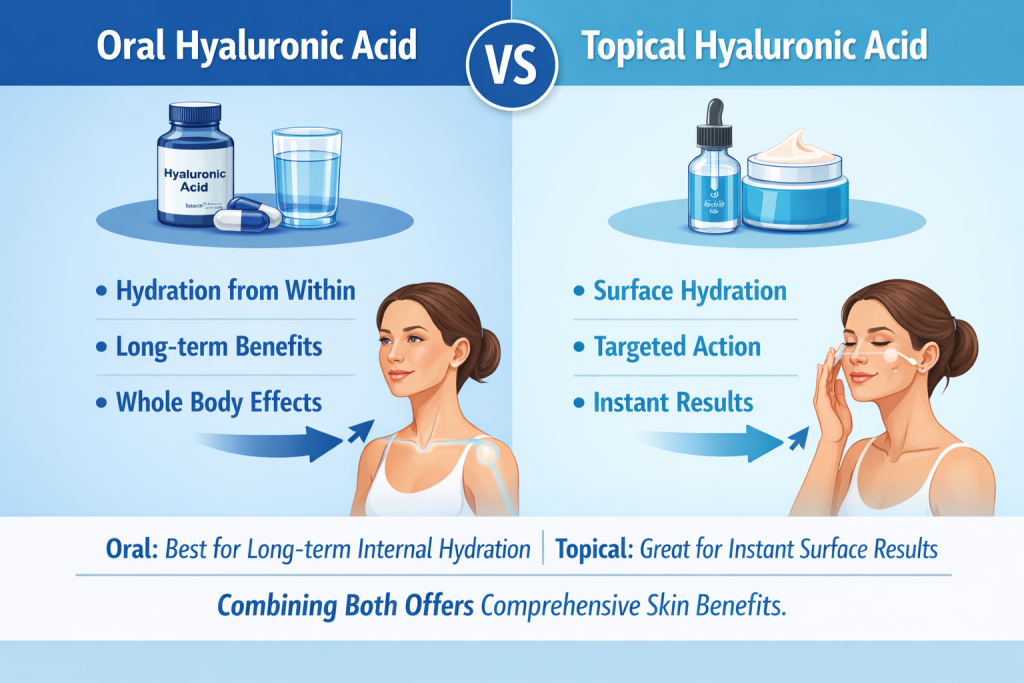
- Topical HA is great for instant hydration and surface-level care. Think of it as a daily skincare step, especially useful in dry climates or when your skin needs a quick moisture boost.
- Oral HA might offer longer-term, deeper support by working on your skin’s metabolism. But you need to take it regularly, and results can differ from person to person.
The good news? You don’t necessarily have to choose. Many skincare experts recommend a “both inside and out” approach: use HA skincare to maintain surface hydration daily, and if it fits your lifestyle and budget, consider a high-quality oral supplement for internal support—ideally after talking to a doctor or a skincare pro.
No matter which option you consider, quality and safety matter. For topical products, check the formula and additional ingredients. For oral supplements, go with trusted brands and follow dosage guidelines. If you have sensitive skin or health concerns, it’s always smart to consult a professional first.
At the end of the day, supplementing with HA is just one piece of the puzzle. For skin that stays healthy and youthful in the long run, nothing beats a balanced diet, good sleep, daily sun protection, and a consistent skincare routine.